SSBTi recently joined the three-day Summer LCA Training Camp organized by the Ecovane Carbon Academy. The intensive program covered the complete workflow of life cycle assessment—from modeling and calculations to report preparation and final presentations.
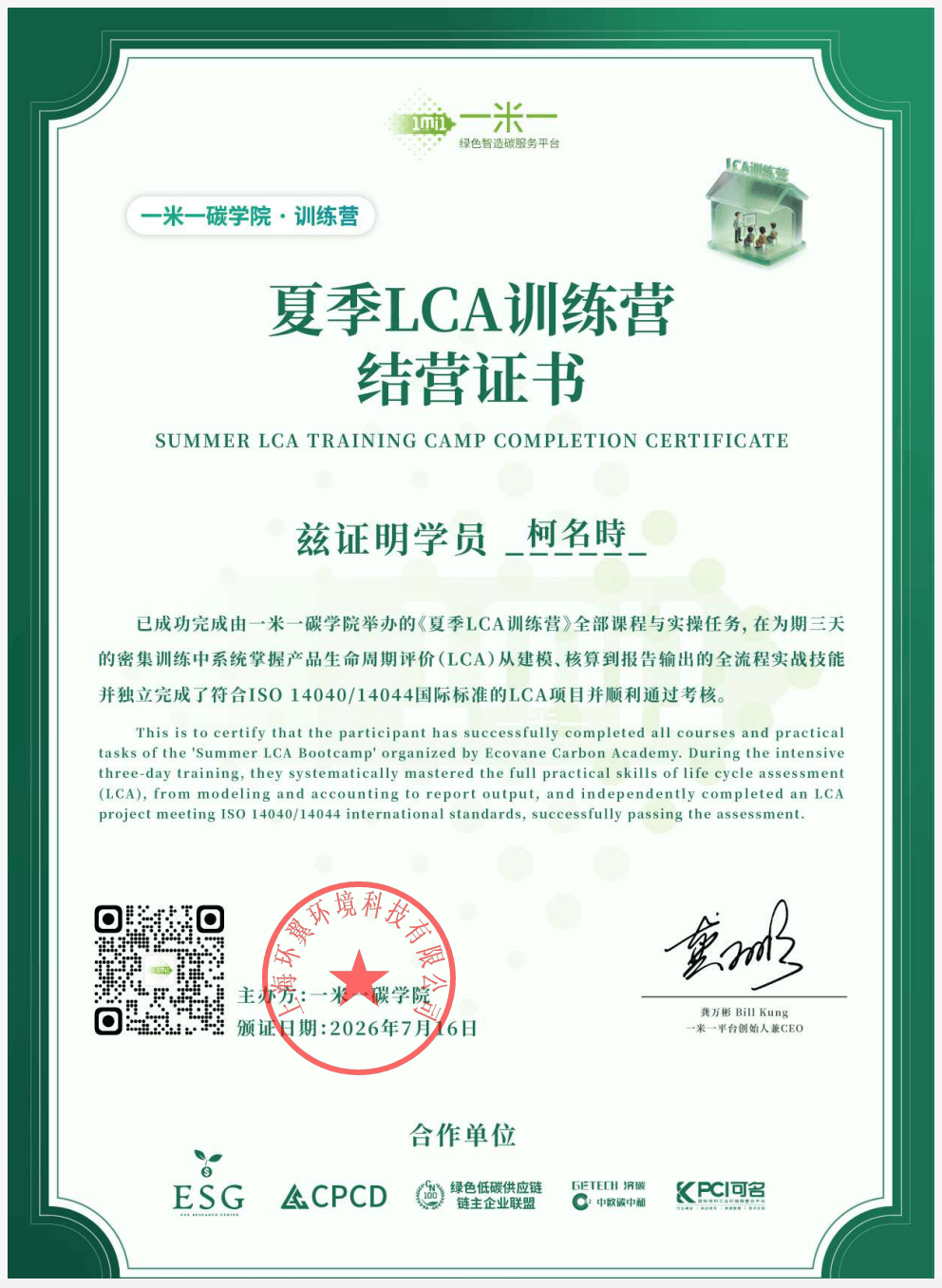
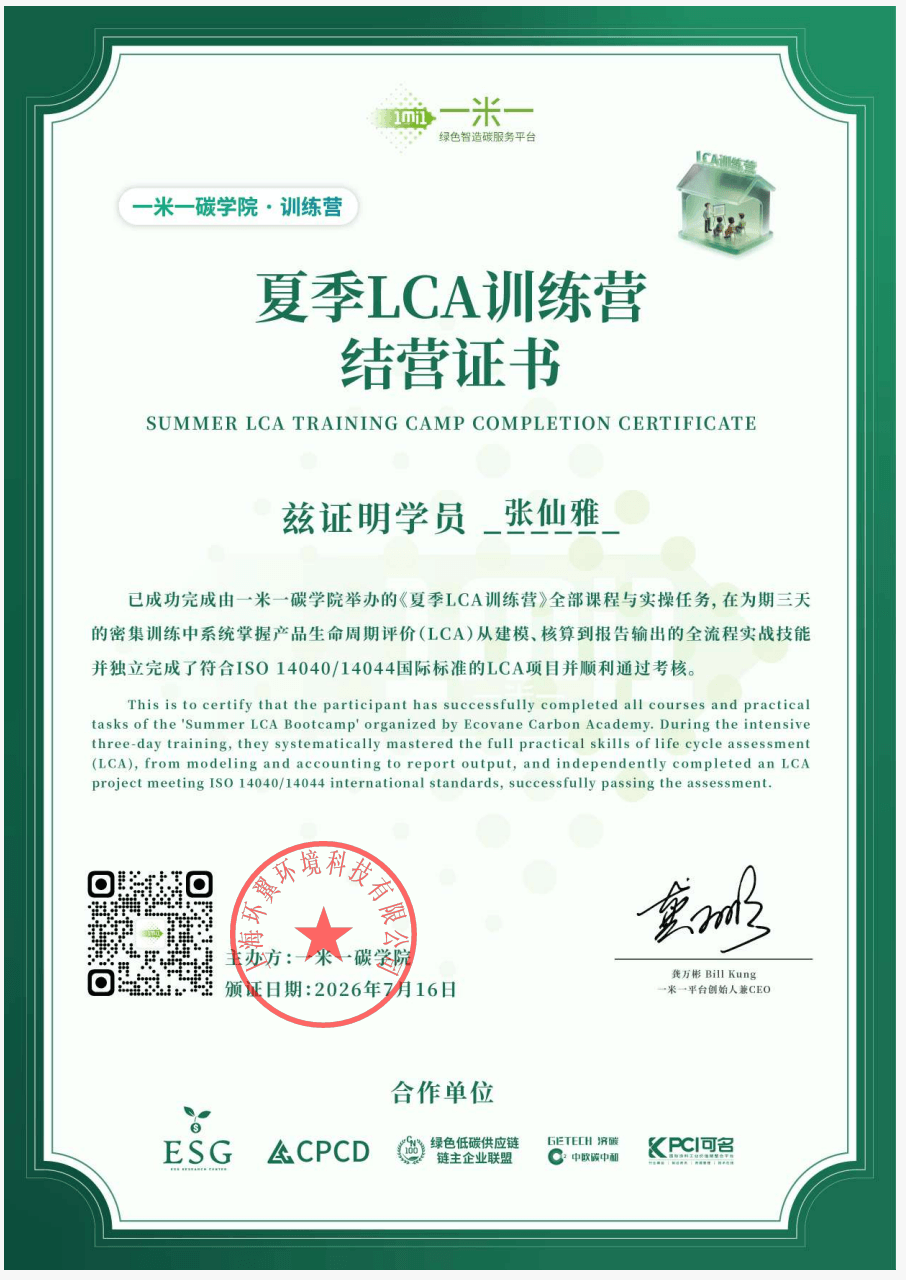
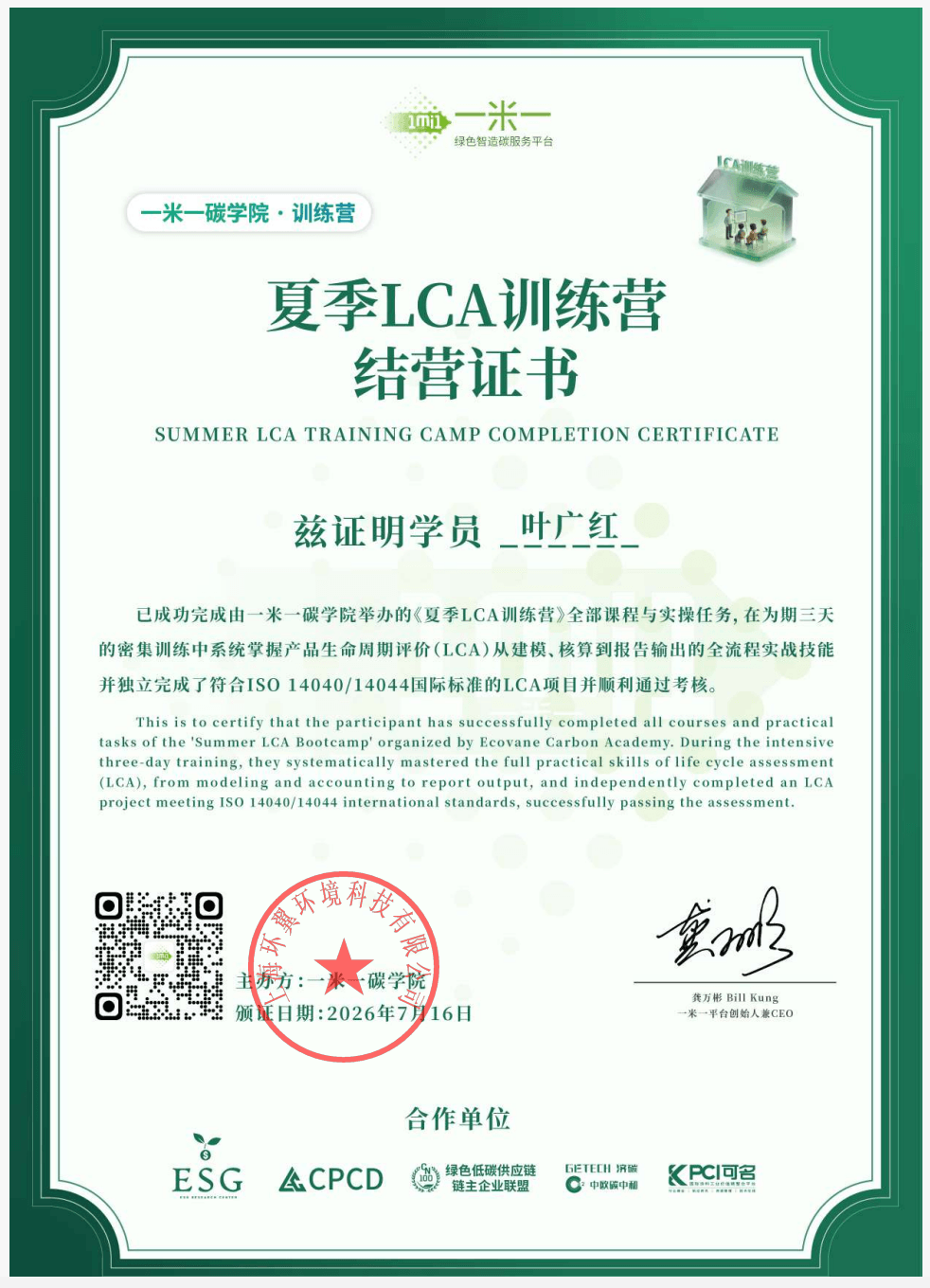
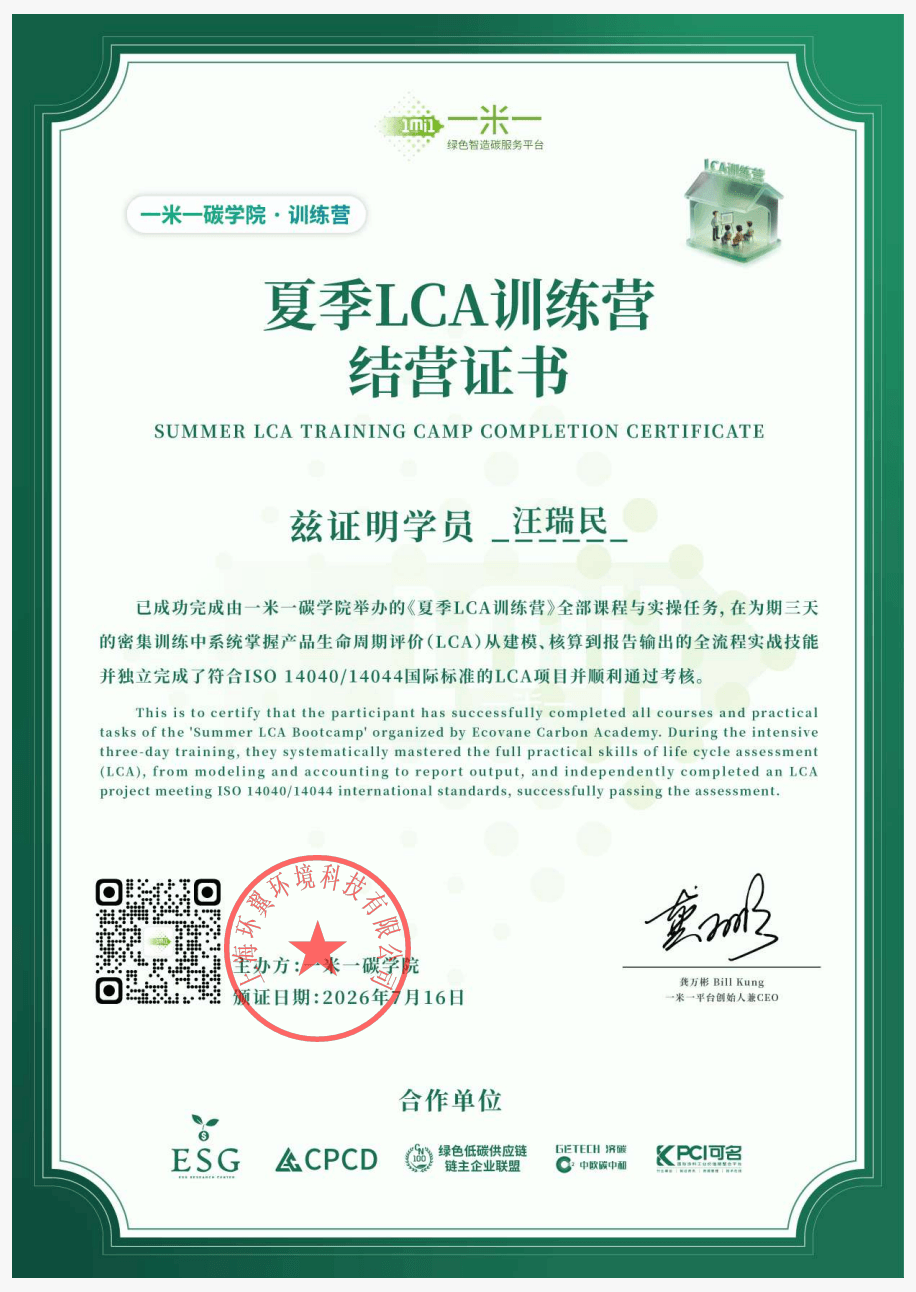
Four SSBTi participants—Raymond Wang (Wang Ruimin), Ye Guanghong, Zhang Xianya and Ming-Shih Ko—successfully completed all coursework and practical assignments, passed the assessment and received their completion certificates.
Two SSBTi participants among the top five
SSBTi delivered an outstanding result, with two participants named among the program’s top five performers: Chairman Raymond Wang and Ming-Shih Ko.
Raymond Wang achieved the highest score throughout the training and finished first overall with 95 points. He was recognized at the closing ceremony and invited to deliver remarks on behalf of the participants.
Three days of practical, end-to-end LCA training
Day One focused on core LCA modeling, beginning with A1 raw-material supply, A2 transportation and A3 manufacturing, then extending to A4 distribution and A5 installation at the customer site.
This broader approach allows companies to look beyond the factory gate and understand the environmental impacts associated with delivery and installation. SSBTi has already applied this methodology in multiple cases with very encouraging results, demonstrating its potential for replication across industries.
Day Two moved into the more advanced—and significantly more challenging—life-cycle stages: Module B for the use phase, Module C for end-of-life and recovery processes, and Module D for reuse, recycling and benefits beyond the system boundary.
These stages are essential to a complete EPD and life-cycle assessment, but they are also among the most difficult elements to model reliably. We were impressed that the program incorporated hands-on modeling of Modules B, C and D within such a focused training format.
Day Three brought the work together through report preparation, project presentations, score announcements and extensive case discussions. Participants were expected not only to operate the tools, but also to explain model structures, data sources, system boundaries and the business meaning of their results.
Making sustainability certification a ticket to business
In his remarks on behalf of the class, Raymond Wang emphasized that sustainability certification should not be treated merely as a compliance document. It can become an entry ticket to business—and a practical starting point for corporate carbon management.
As customers, brands and markets increasingly integrate carbon information into procurement and supply-chain decisions, companies that establish verifiable and traceable LCA capabilities early will be better positioned to turn sustainability requirements into commercial competitiveness. His remarks received an enthusiastic response and generated lively discussion among the participants.
Next step: bringing LCA capabilities into partner factories
Completing the training is only the beginning. SSBTi plans to introduce this practical modeling and reporting methodology across our supply chain and to more partner factories.
Our goal is to help companies move from one-off product assessments toward a repeatable carbon-management capability—one that can support product improvement, procurement discussions, customer trust and market access.
By bringing the full life-cycle perspective of A1–A5 and Modules B, C and D into day-to-day operations, carbon footprints can become much more than certificates. They can serve as a shared foundation for better products, stronger supply-chain collaboration and measurable climate action.
Congratulations to all four SSBTi participants, and our sincere thanks to the Ecovane Carbon Academy for three days of rigorous and highly practical training. SSBTi will continue translating what we learn into industry action as we work with partners to accelerate science-based decarbonization and sustainable supply-chain transformation.